
 Live Radio





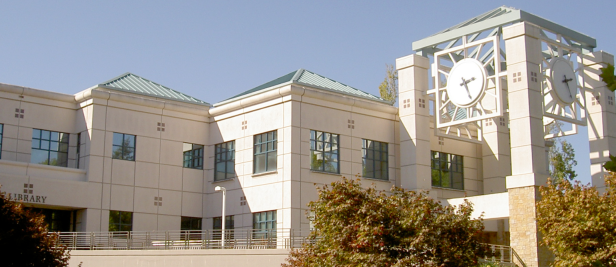 photo credit:
 The east side of the Schultz Library on the Sonoma State Campus in Rohnert Park.
California State University leaders have endorsed a suite of legislative proposals aimed at funneling new nurses into high-need areas of the state, reengaging students who started but never completed college and responding to threats of violence targeting CSU campuses.
Trustees voted to approve those priorities at a Board of Trustees meeting last week. They also urged support for a statewide bond measure that would raise money for higher education facilities and affordable housing for students and employees.The slate of new priorities in Sacramento comes on the heels of recent legislative wins for Cal State, including a law expanding direct admissions in California.
The university system's leaders also breathed a sigh of relief this fall as Gov. Gavin Newsom again vetoed a bill that would have allowed 10 community college districts to offer bachelor's degrees in nursing, something CSU has repeatedly opposed because of duplication concerns.
Those legislative victories notwithstanding, lawmakers have already rebooted a community college bachelor's degree proposal and Cal State officials said they anticipate several other measures they've previously opposed could return to the legislature this session, including efforts to increase auditing and financial reporting requirements.
In addition to those potential challenges, the Jan. 27 presentation also prompted some trustees to call for CSU to back a bolder legislative agenda overall. "Frankly, these things are at the margins when we ought to be thinking broader," said Trustee Julia I. Lopez.
That sentiment was echoed by Diego Arambula, the board's vice chair, who suggested Cal State's proposal on nursing education could be more ambitious. "Gosh, if we were really being bold about it, we would say 'It's going to be big, but this is what it would take to solve the nursing shortage in the state of California,'" he said.
Easing the path to associate degrees for former CSU students
About 5.9 million California adults ages 18 to 64 have some college education but no degree, according to the National Student Clearinghouse Research Center. That means they've absorbed the costs of education without necessarily reaping the financial benefits of higher-paying jobs that require a college credential.
Trustees agreed to support legislation offering one incremental response: Granting associate degrees to former CSU students who completed 60 or more units, but left college without completing their studies. The measure would authorize a pilot program in which a community college and a Cal State campus coordinate their curriculum so that former CSU students can earn a joint associate degree without taking any additional courses. Cal State Long Beach and Long Beach City College are already holding preliminary talks about how a joint degree could work, Assistant Vice Chancellor Nathan Dietrich said in prepared remarks to the board.
Arambula, the board vice chair, said he would like to see the pilot program study job and wage outcomes for former CSU students awarded associate degrees, reflecting the university's new emphasis on job placement.
A Golden State Teacher Grant for future nurses
Predictions of a growing shortage of registered nurses in the state are among the reasons supporters say California should expand the number of bachelor's degrees at community colleges. Cal State leaders have so far fended off many such efforts while cooperating with community colleges on nursing-related initiatives in regions, including Los Angeles and the Central Coast.
Cal State's leaders are now proposing a different way to boost nursing graduates. Trustees plan to sponsor legislation modeled on the Golden State Teacher Grant, a financial aid program for teacher candidates who commit to work in high-need schools. The Cal State-backed proposal would similarly award grants to nursing students who commit to a period of service in a "medically underserved area" of California.
Arambula praised the proposal, but worried that the measure will not address larger bottlenecks, such as high competition for clinical placements, the hands-on training under the supervision of nursing staff that students need to graduate.
"This might be helping some regions get more nurses, without necessarily solving the bigger problem, which is we just have too few," he said.
Restraining orders for threats against colleges
Trustees did not comment during the board meeting on a third proposal the board voted to sponsor: Legislation making it possible to seek a restraining order when threats of violence are directed at a college or university.
The proposal would build on Senate Bill 19, signed into law last year, which makes it a crime to willfully threaten to kill or otherwise seriously injure people at specific places, including universities, schools and churches. Opponents of the measure -- including the California State PTA, ACLU California Action and public defenders groups -- argued that the bill could criminalize expressions of anger or frustration and would likely be used to prosecute students. But police associations and other supporters prevailed, contending that threats of mass shootings at schools and places of worship are difficult to prosecute if they do not target a specific person.
Recent shootings on college campuses, including the killing of conservative activist Charlie Kirk during a speaking event at Utah Valley University and the December shooting at Brown University in Rhode Island, have prompted some college leaders to increase or review security measures. But colleges nationwide are also facing a wave of hoax threats, sometimes called "swatting incidents" because they are designed to provoke police to deploy SWAT teams.
In 2025 and 2026, news media reported threats of violence at several CSU campuses, including Cal State Fullerton, Cal State Monterey Bay, CSU Bakersfield, Cal State Long Beach, Sacramento State and California State University, Northridge.
Bonds for aging infrastructure, research and housing
Cal State leaders have long bemoaned aging infrastructure on their campuses. The university system estimates that its backlog of deferred maintenance exceeds $8.6 billion.
CSU is now banking on a statewide bond measure to help chip away at those towering costs.
A state general obligation bond act, Assembly Bill 48, seeks to raise an unspecified amount of money for building and renovating education facilities at community colleges, the University of California and CSU. It would also finance affordable housing for students and employees.
If it wins approval from lawmakers and voters, the bond would mark the first time since 2006 that UC and CSU received funding from a statewide bond measure, according to a legislative analysis.
Speaking at the January board meeting, Trustee Jack McGrory said that Cal State should "do everything we possibly can" to support the bill, which is authored by Assemblymember David Alvarez. "We have presidents who are sitting in campuses with condemned buildings or buildings that are embarrassing to teach in," he said. "And I've been in those buildings before. I've had to teach in those buildings. And it's not a pretty picture. And our students and our faculty deserve more."
Besides Assembly Bill 48, a few other bond proposals are on Cal State's radar this year. Senate Bill 895 would create a $23 billion scientific research fund in anticipation of potential cuts to federal agencies such as the National Science Foundation and the National Institutes of Health. And Cal State leaders are requesting that two housing bonds, Assembly Bill 736 and Senate Bill 417, be amended to include housing for students, staff and faculty.
